Sub-Zero Refrigerator Repair Across California
A Sub-Zero is the one appliance in the house that was built to outlast the kitchen around it, and when it stops cooling, the wrong technician can do more damage than the fault. We send people who have worked on the platform: dual refrigeration, sealed systems, the evaporator leaks that plague certain 600 series units, and the control and sensor faults on the Classic and Designer series. Same day in most metros, one flat diagnostic fee, and the full repair price in writing before anyone opens a panel.
We are an independent appliance repair company. We are not Sub-Zero Factory Certified Service, and we say so up front. Inside the warranty, Sub-Zero is the right first call. Outside it, which is most Sub-Zero units in California, you are choosing on skill and price, and this is the work we do.
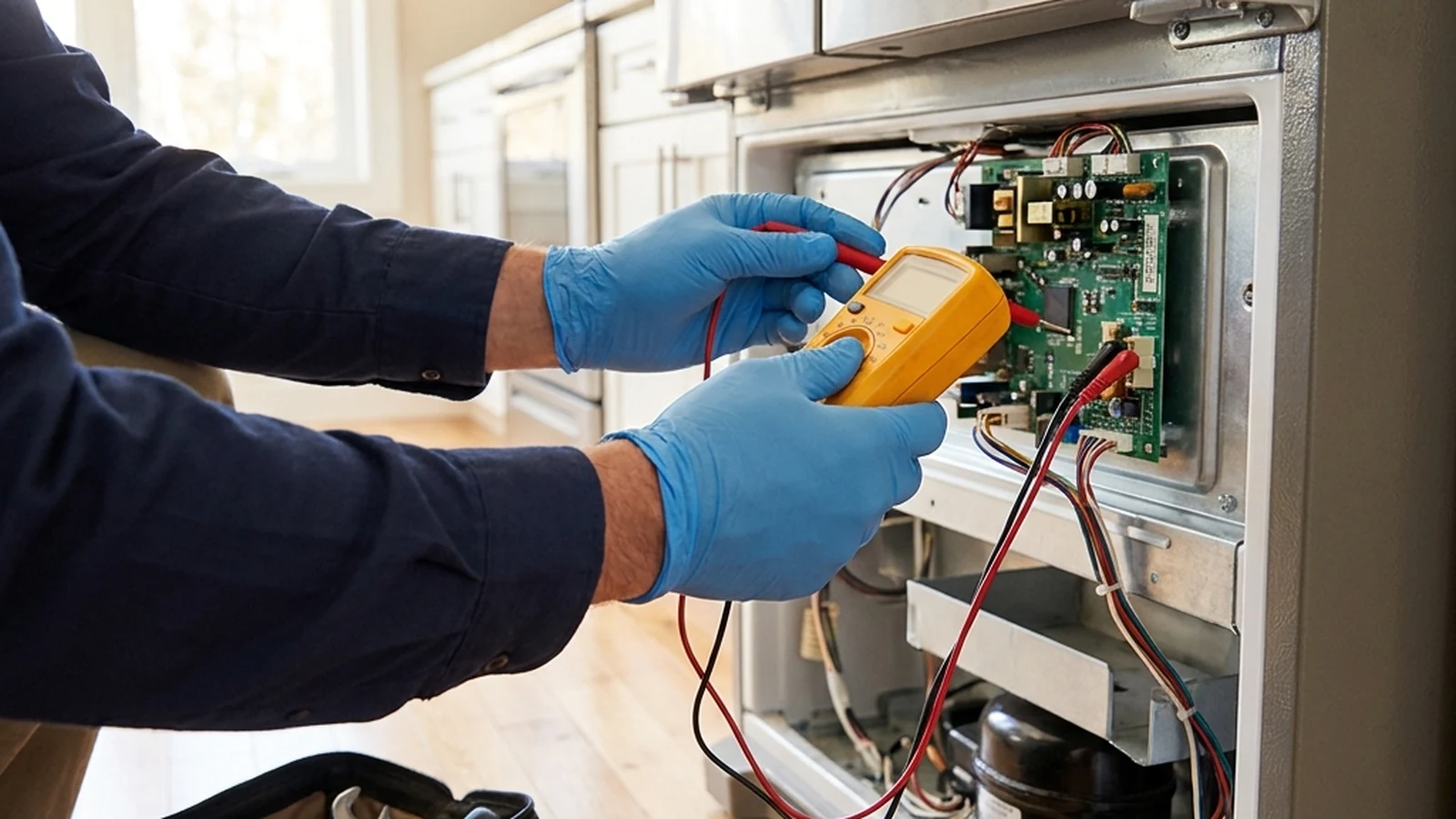
Why Sub-Zero repairs are different.
Dual refrigeration means two diagnoses
On most Sub-Zero built-ins the refrigerator and the freezer each have their own compressor and evaporator. A warm fresh food section with a cold freezer is not a dying unit; it is one of two systems with a fault, and a technician who does not know the platform will chase the wrong one. Ours starts by confirming which side is failing and whether the problem is airflow, a defrost part, a start component, or the sealed system itself.
The condenser decides the lifespan
The condenser coil behind the top grille collects dust, lint and pet hair, and a blocked coil makes the compressor run hot for years. It is the single most common reason a Sub-Zero that should reach 20 years fails at 12. Every visit includes a look at the coil, and if the display is showing Vacuum Condenser, that is where we begin.
Sealed system work needs the right tools and the right license
Compressors, evaporators, driers and refrigerant recharges are sealed system repairs. They require recovery equipment, brazing, vacuum and a weighed charge, and in the United States that work must be done by an EPA certified technician. We do not send a generalist to a sealed system job.
What we repair on Sub-Zero.
- Built-in refrigerators and refrigerator-freezers: 500 series, 600 series, 700 series integrated, BI series, Classic and Designer series, and the PRO 48
- Undercounter refrigeration, drawers, ice makers and wine storage
- Fresh food or freezer sections running warm, constant running, frost and ice buildup
- Evaporator and condenser fan motors, defrost heaters, thermistors and sensors
- Compressors, start relays and overloads, sealed system leaks and recharges
- Ice makers, water inlet valves, water filters and dispenser faults
- Door gaskets, hinges, closer cams and panel alignment
- Control boards, displays, EC error codes and a flashing Service indicator
What a Sub-Zero repair costs in California.
Most Sub-Zero repairs are parts outside the sealed system: fans, thermistors, defrost components, gaskets, ice makers, valves and boards. Parts and labor for those typically land between $300 and $900 after the diagnostic fee is applied. Sealed system work, meaning a compressor, an evaporator, a condenser or a recharge, is a longer job and typically runs between $800 and $2,200. Either way, it is a fraction of replacing a built-in once panels and installation are counted.
The diagnostic fee is $89. It gets a technician to your door, and it is credited to the repair when you go ahead. You get the complete price in writing before any work starts. No hourly clock, and a return visit to fit an ordered part is inside the quote.
Where the Sub-Zero warranty ends and we begin.
Sub-Zero's residential warranty is two years of full parts and labor from the original installation date, five years of full parts and labor on the sealed system, and a limited twelve year sealed system warranty that supplies the parts while the owner pays the labor. Service under that warranty must be performed by Sub-Zero Factory Certified Service, and Sub-Zero does not reimburse parts bought through non-certified service. If your unit is inside those windows with a covered fault, call Sub-Zero first.
Everything else is ours. A unit past two years with a failed fan, gasket, board or ice maker, or past five with sealed system labor on the owner, is a repair you are paying for either way, and the only question is who does it well. That is where an independent specialist earns the call.
What Sub-Zero owners ask us first.
A Sub-Zero built-in refrigerator commonly runs 20 years, and units from the 500 and 600 series that were installed in the late 1990s are still cooling in California kitchens today. The manufacturer designs and tests the platform against a 20 year service life, which is roughly double what a freestanding refrigerator from a big-box store is built for. That figure assumes the unit gets the two things a Sub-Zero actually needs: a clean condenser and a technician who knows the platform when something does fail.
Two things shorten that life. The first is a condenser that never gets cleaned. Dust and pet hair pack the coil, the compressor runs hot for years, and a unit that should have reached 20 quits at 12 with a failed compressor. The second is a repair done by a generalist who replaces parts until the symptom goes away. On a dual refrigeration unit that approach gets expensive fast and can leave the sealed system contaminated.
If your unit is between 10 and 20 years old and has a single fault, the math almost always favors repair. The cabinet, the panels, the hinges and the insulation are not what wears out. The parts that do fail, fans, thermistors, gaskets, valves and eventually a compressor, are all replaceable, and the platform is worth the work in a way few appliances are.
In almost every case, yes. The reasoning is simple: a replacement built-in of the same size runs well into five figures once you add the panels, the installation and often a cabinet modification, while the fault in front of you is usually one component in a unit engineered for two decades. A failed evaporator fan, a leaking gasket, a defrost thermistor or a clogged condenser is a small fraction of that number, and once it is fixed you have the same refrigerator you paid for, not a lesser one.
The decision gets harder in only two situations. The first is a sealed system failure on the refrigerator side of an older dual refrigeration unit, where the evaporator has to be replaced and the system recharged. That is real work, and on a unit past 20 years it deserves an honest conversation about the rest of the machine before you commit. The second is a cabinet or liner problem, which is rare and usually comes from a flood or a move, not from age.
Our technician will tell you which situation you are in before any work starts. You pay a flat diagnostic fee of $89, you get a written quote for the complete repair, and the fee is credited to the job if you go ahead. If the honest answer is that the unit is done, you will hear that too, and you will have paid for a diagnosis rather than a guess.
The most common call we take on a Sub-Zero is not a broken part at all. It is a condenser packed with dust, which shows up as a unit that runs constantly, a refrigerator section that creeps warm on hot days, and on newer models a Vacuum Condenser message on the display. Left alone it takes the compressor with it, so it comes first on this list for a reason.
After that, the pattern depends on the generation. On 500 and 600 series units the frequent failures are evaporator fan motors, defrost thermistors and heaters that let the coil ice over, and on some 600 series refrigerators a slow refrigerant leak on the fresh food side that leaves the freezer cold and the refrigerator warm. On later built-in and Classic series units we see more electronic faults: control boards, temperature sensors and the occasional inverter issue, along with ice maker assemblies and water inlet valves that scale up in hard water areas of the state.
Across every generation, door gaskets, hinge cams and door closers wear with use, and a door that does not seal is the quiet cause of frost, high humidity and long run times. None of these are exotic. They are the parts a technician who works this platform carries on the truck, and most are a single-visit repair.
Because on most Sub-Zero built-ins the refrigerator and the freezer are two separate systems. Sub-Zero calls it dual refrigeration: each side has its own compressor and its own evaporator, so one side can fail completely while the other keeps working. A warm fresh food section with a perfectly cold freezer is not a sign that the whole unit is dying. It means the refrigerator side has a fault, and the list of candidates is short.
The first is airflow. If the evaporator fan on the refrigerator side has stopped, or the coil has iced over because a defrost component failed, cold air is being made but not moved, and the section drifts warm. The second is a refrigerator side compressor that is not starting, often a start relay or overload rather than the compressor itself. The third, and the one that matters most on older 600 series units, is a refrigerant leak in the refrigerator evaporator. The system runs, the coil never gets cold, and the fix is sealed system work.
A technician can tell these apart in one visit with a thermometer, a meter and a set of gauges. What you should not do is keep resetting the unit and waiting, because food in the fresh food section is already at risk. Call (888) 482-7007, describe the symptom exactly as you see it, and we will send someone who has done this repair on this platform.
The price depends on which of two categories the fault falls into, and a technician can tell you which one on the first visit. Most Sub-Zero repairs are mechanical or electrical parts outside the sealed system: fans, thermistors, defrost components, gaskets, ice makers, water valves and control boards. Parts and labor for those repairs typically land between $300 and $900, after the diagnostic fee is applied. The parts cost more than their equivalents on a mass-market refrigerator because they are genuine Sub-Zero components, and the labor reflects a technician who knows where everything is on this platform.
The second category is sealed system work: a compressor, an evaporator, a condenser or a refrigerant recharge. That is a longer job that requires recovery equipment and an EPA certified technician, and it typically runs between $800 and $2,200. Even at that level it is a fraction of replacing a built-in of the same size once panels and installation are counted.
Our diagnostic fee is $89, and it is credited to the repair when you go ahead. You get the full price in writing before any work starts, there is no hourly clock, and a return visit to install an ordered part is inside the quote, not a second charge.
Yes, for work done under the warranty. Sub-Zero's residential warranty states that service under it must be performed by a Sub-Zero Factory Certified Service company. The coverage itself is generous: two years of full parts and labor on the whole unit from the original installation date, five years of full parts and labor on the sealed system (compressor, condenser, evaporator, drier and connecting tubing), and a limited twelve year sealed system warranty that covers those same parts while the owner pays the labor. Sub-Zero also states that it will not reimburse parts bought through non-certified service.
We are an independent repair company and we say so plainly. If your unit is inside the two year full warranty, or inside the five year sealed system warranty with a sealed system fault, your first call should be to Sub-Zero to arrange certified service so the work is covered.
Where we come in is everything else, which in California is most Sub-Zero units. A refrigerator past its second year with a failed fan, gasket, control board or ice maker is out of full coverage, and the owner is paying for the repair either way. From year six onward, sealed system labor is on the owner too. At that point you are choosing a technician on skill and price, and that is exactly the work we do every day.
It is a maintenance reminder, not a fault code. Newer Sub-Zero units keep a running count of compressor hours and, at a set interval, display Vacuum Condenser to tell you the condenser coil is due for cleaning. The condenser is the radiator that dumps heat out of the refrigeration system, and on a built-in it sits behind the grille at the top of the unit where it collects dust, lint and pet hair. When the coil is blocked the compressor works harder and hotter, run times climb, and over years that is what shortens the life of the unit.
Clearing it is a homeowner job on most models: switch the unit off, remove the grille, vacuum the coil gently with a brush attachment, replace the grille and reset the reminder as described on the door panel or in the use and care guide. Do it every three to six months if you have pets or live in a dusty inland area, and at least twice a year otherwise.
Two things turn this from maintenance into a service call. If the message returns within a few weeks of a real cleaning, or if the Service indicator is flashing alongside it, the unit is reporting a temperature or pressure condition it cannot correct on its own. That is when to call (888) 482-7007. Also call if the coil is so packed that it cannot be cleaned with a household vacuum, because forcing it can bend the fins.
The other luxury brands we repair.
Sub-Zero down? Call before the fresh food warms.
A Sub-Zero that has lost one side will hold the other for days, but the warm side is already costing you food. Call (888) 482-7007, tell us the series and what the display shows, and we will send a technician who has done this repair on this platform. Open 7 days, 6am to midnight.